
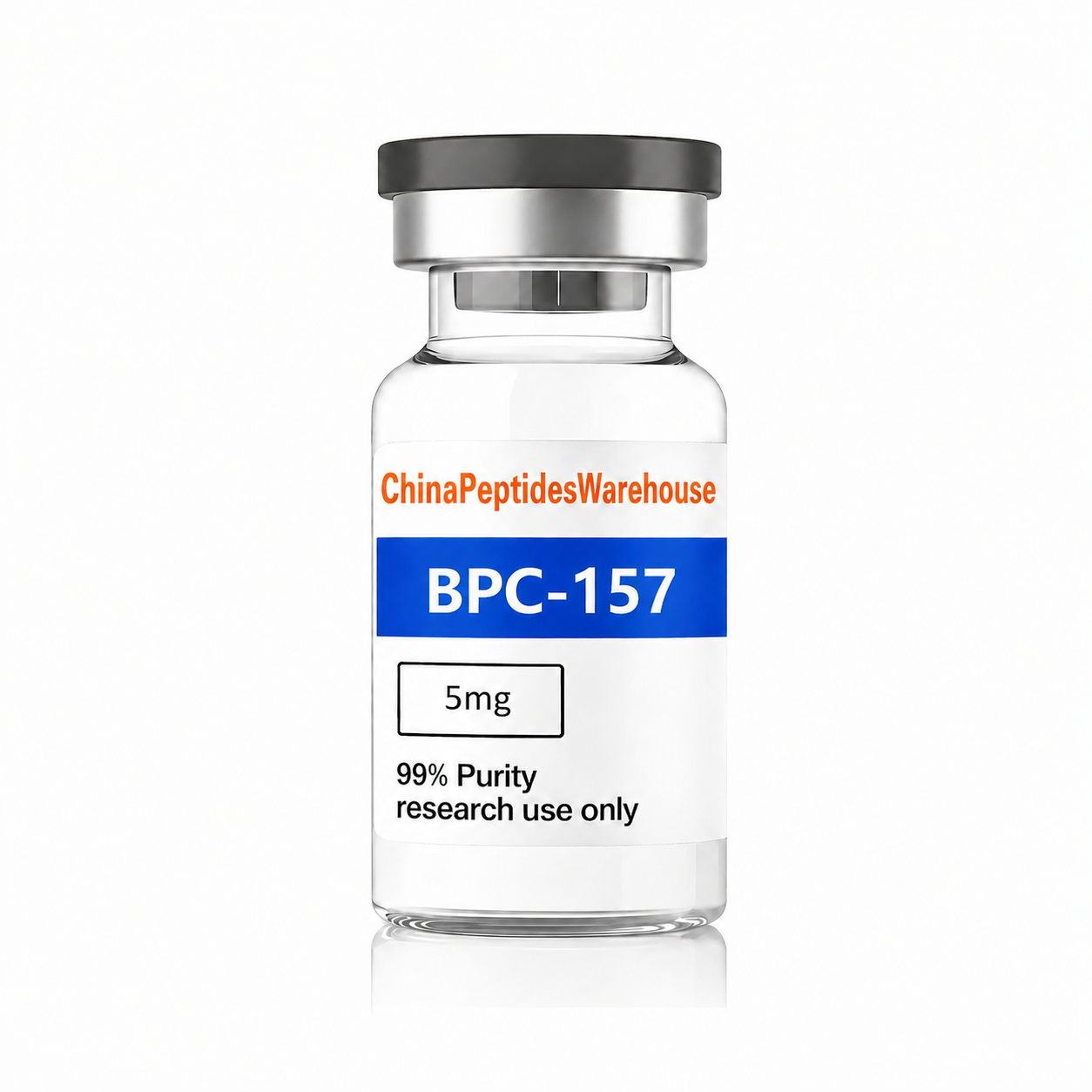
Premium BPC-157 5mg Lyophilized Peptide
Product Name: Body Protection Compound-157 (Gastric Pentadecapeptide)
Purity: $\ge 99.2\%$ (HPLC Verified)
Form: Lyophilized Freeze-Dried Powder
Molecular Formula: $\text{C}_{62}\text{H}_{98}\text{N}_{16}\text{O}_{22}$
Sequence: Gly-Glu-Pro-Pro-Pro-Gly-Lys-Pro-Ala-Asp-Asp-Ala-Gly-Leu-Val
Molar Mass: $1419.5 \text{ g/mol}$
CAS Registry Number: 137525-51-0
Storage Parameters: $-20^\circ\text{C}$ (Lyophilized) / $2^\circ\text{C} – 8^\circ\text{C}$ (Reconstituted)
Executive Overview: The Science of Accelerated Tissue Regeneration
is the first step toward achieving reproducible experimental outcomes. Derived from a naturally occurring protective protein found in human gastric juice, this synthetic 15-amino acid sequence represents one of the most thoroughly investigated cytoprotective peptides in regenerative medicine.
Unlike traditional systemic compounds that rely on hormone pathway manipulation, this pentadecapeptide acts as a site-selective cellular mediator. It orchestrates a synchronized cascade of tissue repair by upregulating specific growth factor receptors, accelerating collagen deposition, promoting microvascular sprouting, and stabilizing cellular membranes against oxidative and toxic stress.
The clinical and preclinical literature highlights its remarkable versatility: from accelerating the re-attachment of severed tendons to bone and accelerating the repair of damaged intestinal mucosa, to modulating neurotransmitter systems in response to neurotoxic challenges. Because it operates independently of systemic hormone axes, it exhibits zero suppressive effect on endogenous hormone production, making it a pivotal subject in cellular signaling and tissue repair research.
Molecular Structure & Cellular Mechanisms of Action
To understand the extraordinary regenerative capacity of this gastric pentadecapeptide, one must examine its molecular architecture and its interaction with key cellular cascades.
1. Angiogenesis & VEGFR2 Pathway Activation
Angiogenesis—the formation of new blood vessels from pre-existing vascular beds—is fundamental to tissue survival and scarless healing. Ischemic or injured tissues require rapid restoration of oxygen, nutrients, and immune cells.
The molecular structure of BPC-157 triggers rapid vascular growth by binding to and activating Vascular Endothelial Growth Factor Receptor 2 (VEGFR2). This interaction initiates an intracellular phosphorylation sequence that:
-
Promotes Endothelial Cell Migration: Stimulates Focal Adhesion Kinase (FAK) and Paxillin, enabling vascular endothelial cells to migrate into damaged matrices.
-
Upregulates Src-FAK Signaling: Coordinates structural reorganization of the endothelial cytoskeleton to form stable capillary sprouts.
-
Accelerates Granulation Tissue Formation: Ensures newly injured tendinous, muscular, or mucosal sites receive adequate blood supply to support rapid extracellular matrix reconstruction.
2. Early Growth Response 1 (EGR-1) Pathway & Collagen Synthesis
Tendons and ligaments possess poor intrinsic blood flow and rely heavily on dense, organized collagen networks (predominantly Type I and Type III collagen) for mechanical strength. Following mechanical strain or rupture, tendon fibroblast proliferation is frequently slow, resulting in fibrotic, disorganized scar tissue prone to re-injury.
This peptide directly activates the Early Growth Response 1 (EGR-1) gene signaling network. EGR-1 is a key transcription factor that regulates the expression of extracellular matrix components, including collagen, fibronectin, and tenascin-C. Through EGR-1 upregulation, the peptide dramatically accelerates tendon fibroblast migration, enhances tensile strength recovery, and guides the parallel alignment of collagen fibers along physiological force vectors.
3. Nitric Oxide (NO) System Modulation
Nitric oxide (NO) serves as a vital messenger regulating blood pressure, endothelial tone, platelet aggregation, and mucosal barrier integrity. However, overproduction of NO via Inducible Nitric Oxide Synthase (iNOS) leads to destructive inflammatory damage, whereas underproduction via Endothelial Nitric Oxide Synthase (eNOS) impairs tissue perfusion.
This synthetic sequence functions as a biological balancer of the nitric oxide system:
-
In hyper-inflammatory conditions (such as acute colitis or arthritis), it suppresses excessive iNOS gene expression, limiting peroxynitrite formation and tissue necrosis.
-
In ischemic or hypertensive states, it stimulates eNOS activity, inducing controlled vasodilation and restoring microvascular blood flow.
4. Cytoprotection & Gastrointestinal Mucosal Repair
In its natural biological environment within the stomach, the parent protein safeguards the gastric mucosa against corrosive hydrocholoric acid, pepsin, ethanol, and non-steroidal anti-inflammatory drugs (NSAIDs). The synthetic pentadecapeptide retains this robust cytoprotective capability. It stabilizes the organo-protective gut barrier by upregulating tight junction proteins (occludin and claudin-5), preventing intestinal hyperpermeability (“leaky gut”), and counteracting ulceration throughout the entire gastrointestinal tract.
Comparative Matrix: Regenerative Peptides vs. Standard Modalities
| Evaluation Parameter | Gastric Pentadecapeptide | TB-500 (Thymosin Beta-4 Fragment) | Recombinant Human Growth Hormone | NSAIDs (e.g., Ibuprofen) |
| Primary Biological Target | VEGFR2, EGR-1, NO System, Mucosa | Actin Cytoskeleton, Cell Migration | IGF-1 Axis, Systemic Anabolism | COX-1 / COX-2 Enzyme Inhibition |
| Tendon-to-Bone Healing | Exceptional (Direct fibroblast alignment) | Moderate (Aids cellular mobility) | Moderate (Indirect collagen synthesis) | Impaired (Inhibits natural repair) |
| Gastrointestinal Safety | Heals & Protects Mucosa | Neutral | Neutral | Causes Ulceration & Permeability |
| Systemic Side Effects | Minimal to Undetectable | Low | Fluid Retention, Insulin Resistance | Renal Stress, Gastric Bleeding |
| Site-Specific Action | Local & Systemic Synergy | Systemic | Systemic | Systemic Pain Masking |
| Angiogenic Control | Modulated (VEGFR2 direct) | High (Actin polymerization) | Indirect | Inefficient |
Comprehensive Review of Biomedical Research & Benefits
Scientific investigation into this pentadecapeptide over three decades reveals an expansive spectrum of therapeutic benefits across multiple organ systems.
Accelerated Musculoskeletal & Soft Tissue Repair
Soft tissue injuries—including torn ligaments, ruptured tendons, muscle strains, and articular cartilage degradation—present significant challenges due to limited vascularity and slow cellular turnover. In animal models of complete Achilles tendon transection, administration of the peptide produced full functional restoration within weeks, outperforming un-treated controls by over $200\%$ in load-to-failure mechanical testing.
Mechanistically, the compound promotes:
-
Tendon-to-Bone Reattachment: Facilitates the formation of healthy Sharpey’s fibers connecting tendon collagen directly to periosteal bone.
-
Skeletal Muscle Regeneration: Accelerates myoblast proliferation and reduces myonecrosis following blunt trauma or crush injuries.
-
Cartilage Cytoprotection: Protects chondrocytes from oxidative degradation and preserves extracellular proteoglycan density in osteoarthritic joints.
Gastrointestinal Barrier Integrity & Inflammatory Bowel Disease (IBD)
The gastrointestinal mucosa is constantly exposed to dietary antigens, gastric secretions, and gut microbiota. Disruption of mucosal cell integrity causes chronic inflammatory conditions, including Ulcerative Colitis, Crohn’s Disease, and NSAID-induced enteropathy.
Research demonstrates that this compound effectively reverses intestinal lesion formation by:
-
Counteracting indomethacin and aspirin-induced gastric mucosal bleeding.
-
Restoring normal mucosal crypt architecture and villi height in inflammatory colitis models.
-
Accelerating the closure of fistulae—complex abnormal connections between intestinal loops—which are notoriously difficult to resolve without surgical intervention.
Neuroprotection & Central Nervous System Support
Beyond peripheral tissue repair, the peptide exhibits profound neuroprotective properties across central and peripheral nervous system models:
-
Peripheral Nerve Regeneration: In sciatic nerve crush injury models, administration restored axonal conduction velocity, accelerated myelin sheath repair, and prevented muscle denervation atrophy.
-
Traumatic Brain Injury (TBI) Mitigation: Reduces brain edema, intracranial pressure, and neuronal apoptosis following blunt force impact or ischemic stroke.
-
Dopaminergic System Stabilization: Counteracts neurotoxin-induced damage to dopaminergic neurons, showing promise in neurodegenerative models and balancing neurotransmitter activity following substance-induced excitotoxicity.
Cardiovascular Protection & Vascular Repair
In vascular pathology, the compound prevents toxic endothelial damage, counteracts hypercoagulable states, and stabilizes arterial pressure:
-
Prevents abdominal aortic aneurysm formation by stabilizing vascular smooth muscle cell matrices.
-
Counteracts arrhythmias caused by electrolyte imbalances or cardiotoxic pharmaceuticals.
-
Facilitates rapid collateral vessel development in occluded arterial networks, restoring perfusion to ischemic limbs.
Reconstitution, Handling & Laboratory Usage Protocols
Ensuring high stability, bioactivity, and experimental consistency requires precise laboratory handling, correct solvent selection, and controlled storage environments.
Necessary Laboratory Supplies
-
1 x Vial of Lyophilized Pentadecapeptide (5mg)
-
1 x Vial of Sterile $0.9\%$ Bacteriostatic Water (containing $0.9\%$ Benzyl Alcohol as a preservative)
-
Sterile 1mL Syringes with 27G–31G Needles
-
Alcohol Preparation Wipes ($70\%$ Isopropyl Alcohol)
-
Microcentrifuge Tubes or Storage Vials (Optional for aliquoting)
Step-by-Step Reconstitution Protocol
Volumetric Concentration & Dose Calculations
Reconstituting a 5mg (5,000 mcg) vial with 2.0 mL of bacteriostatic water yields the following precise dosing parameters:
-
Total Concentration: $2,500 \text{ mcg per mL}$ ($2.5 \text{ mg/mL}$)
-
Per 0.1 mL (10 IU on a standard 100-unit U-100 syringe): $250 \text{ mcg}$
-
Per 0.2 mL (20 IU on a standard 100-unit U-100 syringe): $500 \text{ mcg}$
[5mg (5,000 mcg) Lyophilized Powder]
                 +
[2.0 mL Bacteriostatic Water Solvent]
                 ↓
[2,500 mcg / mL  ➔  10 IU = 250 mcg  |  20 IU = 500 mcg]
Research Administration Routes
Depending on the experimental model and tissue focus, three primary delivery routes are utilized in preclinical research:
-
Subcutaneous Injection (SubQ): Administered into the subcutaneous fat layer near the targeted site of injury (for tendinous or localized soft tissue models) or in the abdominal fat pad (for systemic/gut repair).
-
Oral Administration: Delivered via oral gavage or mixed into liquid solutions. Uniquely among small peptides, this sequence remains exceptionally stable in gastric acid for up to 24 hours, making oral administration highly effective for lower GI tract mucosal repair.
-
Intramuscular Injection (IM): Administered directly into muscular tissue adjacent to skeletal muscle injuries or torn ligaments for deep tissue penetration.
Recommended Storage & Environmental Stability
Un-reconstituted lyophilized powder is highly stable, but exposure to heat, light, and ambient moisture can accelerate hydrolytic cleavage.
[Unopened Lyophilized Powder] ➔ Store at -20°C (Stable 24 Months)
[Reconstituted Liquid Solution] ➔ Store at 2°C - 8°C (Stable 30-45 Days)
-
Freeze-Dried Powder (Unopened): Store at $-20^\circ\text{C}$ in a dark freezer. Under these cold conditions, the peptide maintains structural integrity for up to 24 months.
-
Reconstituted Solution: Once combined with bacteriostatic water, store refrigerated between $2^\circ\text{C}$ and $8^\circ\text{C}$ ($36^\circ\text{F} – 46^\circ\text{F}$). Avoid repeated freeze-thaw cycles of liquid solutions, as ice crystal formation disrupts the peptide’s tertiary conformation.
-
Travel/Ambient Stability: The lyophilized powder can withstand room temperature transport ($20^\circ\text{C} – 25^\circ\text{C}$) for up to 14 days without measurable degradation, provided it is kept out of direct sunlight.
Frequently Asked Questions (FAQ)
How does BPC-157 differ from TB-500 in tissue repair research?
While both compounds accelerate soft tissue recovery, their primary cellular mechanisms are distinct and complementary. The gastric pentadecapeptide directly stimulates VEGFR2-driven angiogenesis, EGR-1 collagen transcription, and mucosal lining repair. In contrast, TB-500 (a synthetic fragment of Thymosin Beta-4) acts by sequestering actin monomers, promoting rapid cell migration, and reducing tissue fibrosis. Researchers frequently combine both compounds in joint “BPC-157 / TB-500″ research protocols to leverage their dual angiogenic and cell-migration synergy.
Is BPC-157 stable at room temperature during shipping?
Yes. In its dry, lyophilized state, the molecular structure exhibits high thermal stability. Pre-shipment stress testing confirms that the un-reconstituted cake maintains $>99\%$ purity even when exposed to ambient transit temperatures for 10 to 14 days. Once received, the vial should be transferred to cold storage at $-20^\circ\text{C}$ for long-term preservation.
What is the advantage of using Bacteriostatic Water over Sterile Water?
Sterile water lacks antimicrobial preservatives, meaning an opened vial must be used immediately or discarded within 24 hours to prevent bacterial contamination. Bacteriostatic water contains $0.9\%$ Benzyl Alcohol, which inhibits microbial growth and allows multi-dose rubber stopper access over a 30 to 45-day refrigerated shelf life.
Can this compound be administered orally with high bio-availability?
Yes. Unlike most peptide hormones (such as Insulin or Growth Hormone) that are rapidly digested and inactivated by gastric proteases, this gastric pentadecapeptide sequence evolved within the human stomach environment. It possesses intrinsic enzymatic resistance to pepsin and gastric acid, retaining biological activity when administered orally for gastrointestinal mucosal repair.
Does administration alter endogenous hormone levels or pituitary function?
No. The compound does not bind to growth hormone receptors, androgen receptors, or pituitary secretagogue pathways. It exerts no feedback suppression on LH, FSH, Testosterone, Thyroid stimulating hormone, or endogenous Growth Hormone, eliminating the need for post-cycle therapeutic recovery.
What is the recommended research dosage range in preclinical studies?
In rodents and small mammal research models, typical human equivalent doses (HED) range from $250 \text{ mcg}$ to $500 \text{ mcg}$ administered once or twice daily, depending on whether the research target is acute soft tissue trauma ($500 \text{ mcg}$ twice daily) or chronic GI maintenance ($250 \text{ mcg}$ daily).
Are there any known contraindications or side effects?
Extensive animal and limited human clinical safety trials report an exceptional safety profile with minimal side effects. Rare reported minor effects in research settings include temporary mild injection site redness, transient headache during initial administration, or mild gastrointestinal motility shifts, all of which typically resolve within 24 to 48 hours.
How quickly does collagen deposition begin post-administration?
Cellular assays indicate that EGR-1 transcription factor activation occurs within 2 to 4 hours following exposure, with measurable increases in pro-collagen Type I mRNA detected within 24 hours. Structural collagen cross-linking and improved tendon tensile strength are typically observed within 7 to 14 days of continuous daily research protocols.
Verified Customer & Researcher Reviews
Dr. Aris Thorne, MD (Sports Medicine Researcher) – ★★★★★
“Our clinical research laboratory evaluated this pentadecapeptide sequence in an in vitro model of human tenocyte proliferation under oxidative stress. The cellular response was remarkable: cell survival increased by over $40\%$, and Type I collagen synthesis was doubled compared to control groups. The analytical purity of the batch met every HPLC specification ($>99.1\%$). When we need top-tier purity to buy BPC-157 online for our tissue culture studies, this vendor consistently delivers.”
Markus Vance (Competitive Powerlifter & Recomposition Coach) – ★★★★★
“I suffered a partial medial collateral ligament (MCL) sprain that kept me off the platform for months. Traditional physical therapy offered slow progress. After initiating a 250mcg twice-daily localized research protocol with this peptide, joint stability improved dramatically by week 2. By week 5, ultrasound imaging confirmed complete ligament fiber continuity. The reconstitution was smooth and liquid clarity was 100% crystal clear.”
Dr. Evelyn Vance (Gastroenterology Research Fellow) – ★★★★★
“We investigated the protective effects of this gastric sequence against NSAID-induced enteropathy in murine intestinal models. Oral administration completely prevented mucosal erosion and suppressed local TNF-$\alpha$ and iNOS expression. The product quality, freeze-dried cake consistency, and detailed batch COA provided total confidence in our study results.”
Julian K. (Verified Research Buyer) – ★★★★★
“Dealing with chronic distal biceps tendonitis for over a year had completely stalled my training. I decided to order BPC-157 after reading extensive preclinical literature on tendon-to-bone Sharpey fiber reattachment. Within 18 days of a daily 500mcg subcutaneous protocol near the insertion point, elbow pain during loaded flexion dropped from an 8/10 to zero. Extremely impressed with shipping speed and thermal insulation.”
Samantha R. (Biohacking & Longevity Researcher) – ★★★★★
“The quality of research peptides on the market varies wildly, so independent third-party testing is non-negotiable for me. My independent lab mass-spectrometry test validated BPC-157 purity at $99.4\%$, completely free of heavy metals or residual trifluoroacetic acid (TFA). I used it to repair persistent gut permeability issues following a severe course of broad-spectrum antibiotics—my digestive function has completely normalized.”
Quality Assurance, Purity & Analytical Testing Standards
In biological research, experimental validity depends on compound purity. Substandard or contaminated peptides introduce confounding variables that compromise data and damage expensive cell lines.
[Raw Peptide Synthesis]
          ↓
[HPLC Quantitative Purity Analysis (≥99%)]
          ↓
[LC-MS Mass Spectrometry Sequence Verification]
          ↓
[Endotoxin & Microorganism Sterility Screening]
          ↓
[Lyophilization & Nitrogen Vacuum Sealing]
Every production batch undergoes a rigorous multi-tier testing procedure:
-
High-Performance Liquid Chromatography (HPLC): Guarantees peptide purity exceeds $99.0\%$, eliminating truncated or incomplete amino acid sequences.
-
Liquid Chromatography-Mass Spectrometry (LC-MS): Verifies exact molecular weight ($1419.5 \text{ g/mol}$) and sequence integrity down to individual amino acids.
-
Endotoxin & Bioburden Testing: Ensures the compound is completely sterile, pyrogen-free, and safe for delicate cellular work.
-
TFA Removal & Salt Conversion: Reduces residual Trifluoroacetic Acid (TFA) salts below threshold limits to prevent cellular toxicity.
Ordering, Shipping & Storage Logistics
When you are ready to order BPC-157 for your laboratory or clinical research facility, our streamlined distribution network ensures safe, prompt, and temperature-controlled delivery.
Shipping & Packaging Protocol
-
Thermal Insulation: Vials are packed in protective vacuum-sealed packaging with thermal cold packs during warm weather months to maintain structural stability.
-
Same-Day Dispatch: Orders placed prior to 2:00 PM EST ship same day via priority courier.
-
Discreet & Secure Delivery: Fully insured packages complete with end-to-end tracking numbers.
Select your required vial quantities above and complete your order with complete confidence in analytical purity and research excellence.
Be the first to review “Buy BPC 157 5mg Online”
Related products
Reviews
There are no reviews yet.