
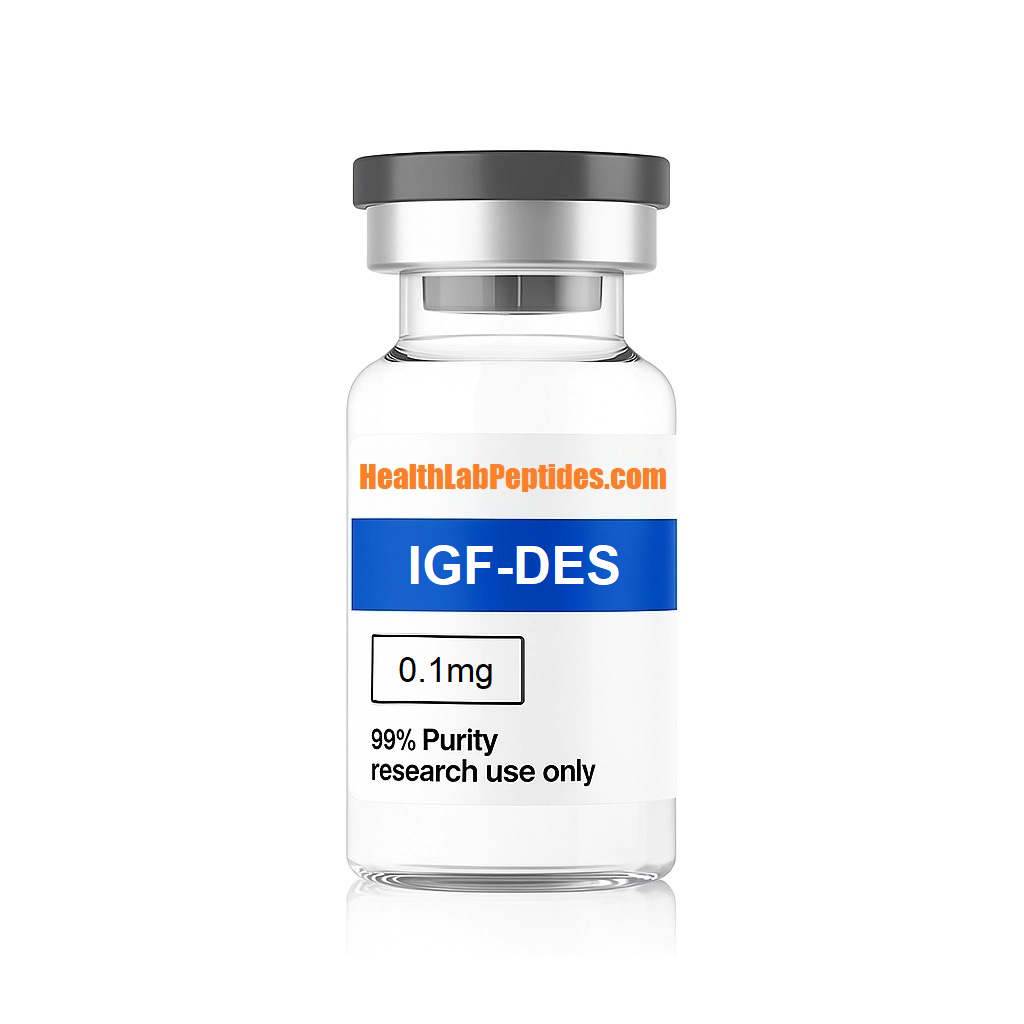
Buy IGF-DES 0.1mg Online
$29.99
Buy IGF-DES 0.1mg Online. IGF-DES 0.1mg has become an increasingly discussed topic in the fields of peptide research and cellular biology.
Buy IGF-DES 0.1mg Online
Buy IGF-DES 0.1mg Online. IGF-DES 0.1mg has become an increasingly discussed topic in the fields of peptide research and cellular biology. As interest in peptides continues to grow, researchers and science enthusiasts are exploring compounds like IGF-DES for their unique biological properties and potential applications in controlled laboratory settings.
For more peptide-related insights and product listings, you can explore:
Website: https://chinapetideswarehouse.com/
Email: bellapeptides48@gmail.com
WhatsApp: +1 (304) 416-2016
What Is IGF-DES 0.1mg?
IGF-DES, also known as Insulin-Like Growth Factor DES (1-3), is a modified version of the naturally occurring hormone IGF-1. This peptide has been altered by removing three amino acids from its structure, which significantly changes how it interacts with the body at a cellular level.
Due to this structural modification, IGF-DES is often studied for its localized activity and rapid interaction with target tissues in laboratory environments. Unlike standard IGF-1, IGF-DES is believed to exhibit a more targeted binding behavior, making it a subject of interest in biochemical and physiological research.
Structural Characteristics of IGF-DES
The defining feature of IGF-DES lies in its altered amino acid chain. By removing the first three amino acids from IGF-1, researchers have observed differences in receptor binding and cellular interaction.
Key structural traits include:
- Shortened peptide chain
- Reduced binding to IGF-binding proteins
- Increased availability at receptor sites
- Enhanced localized activity in experimental models
These characteristics make IGF-DES distinct from other peptides commonly studied in the same category.
How IGF-DES Works
IGF-DES interacts with the IGF-1 receptor (IGF-1R), which plays a crucial role in cell signaling pathways. When this receptor is activated, it can trigger a cascade of biological processes that are widely studied in research settings.
Mechanism of Action
In simplified terms, IGF-DES is believed to:
- Bind to IGF-1 receptors
- Activate intracellular signaling pathways
- Influence cellular processes such as growth and repair
- Exhibit localized activity due to reduced protein binding
Because IGF-DES has a lower affinity for binding proteins, it may remain more bioavailable at specific sites, which is why it is often studied for targeted effects in controlled experiments.
IGF-DES vs IGF-1 LR3: Key Differences
One of the most common comparisons in peptide research is between IGF-DES and IGF-1 LR3. While both are modified versions of IGF-1, they differ significantly in structure and behavior.
IGF-DES
- Shorter peptide chain
- Rapid activity
- Localized interaction
- Shorter half-life
IGF-1 LR3
- Extended amino acid chain
- Longer half-life
- More systemic activity
- Higher resistance to degradation
Researchers often choose between these peptides depending on the specific goals of their study, whether focusing on localized cellular responses or broader systemic effects.
Research Applications of IGF-DES
IGF-DES is primarily studied in laboratory and experimental environments. Its unique properties make it a subject of interest in several areas of scientific research.
1. Cellular Growth Studies
IGF-DES is frequently examined for its role in cellular growth signaling pathways. Researchers analyze how it interacts with receptors and influences cellular responses.
2. Tissue Interaction Research
Due to its localized activity, IGF-DES is studied for how it behaves in specific tissue environments under controlled conditions.
3. Protein Synthesis Pathways
Some research explores how IGF-DES may influence protein-related pathways at a cellular level.
4. Receptor Binding Analysis
Scientists study IGF-DES to better understand how structural changes in peptides affect receptor binding and biological activity.
Stability and Handling in Research Settings
Like many peptides, IGF-DES requires careful handling to maintain its integrity during research.
Common considerations include:
- Storage at low temperatures
- Protection from light and moisture
- Proper reconstitution techniques
- Use within recommended timeframes
Maintaining stability is essential for ensuring accurate and reproducible research outcomes.
Why IGF-DES Is Gaining Attention
The growing interest in IGF-DES can be attributed to several factors:
Unique Structure
Its modified amino acid sequence offers researchers a different perspective on peptide behavior.
Targeted Activity
The potential for localized interaction makes it valuable in specific experimental designs.
Expanding Peptide Research Field
As peptide science continues to evolve, compounds like IGF-DES are gaining visibility in academic and research discussions.
Important Considerations
It is essential to understand that IGF-DES is:
- Intended for research purposes only
- Not approved for medical or therapeutic use
- Not intended for human consumption
Researchers must always follow ethical guidelines, regulatory standards, and proper laboratory protocols when working with peptides.
The Growing Role of Peptides in Science
Peptides like IGF-DES are part of a broader category of compounds that are increasingly studied in modern science. They are used to explore:
- Cellular communication
- Hormonal signaling pathways
- Molecular biology mechanisms
- Protein interactions
As scientific technology advances, peptides continue to provide valuable insights into how biological systems function at a microscopic level.
Educational Resources and Research Exploration
If you are interested in learning more about peptides, scientific research, and related compounds, there are various online resources available.
For additional information and peptide-related content, you can explore:
Website: https://chinapetideswarehouse.com/
Email: bellapeptides48@gmail.com
WhatsApp: +1 (304) 416-2016
These platforms may provide further insights into peptide research and product availability for laboratory use.
Frequently Asked Questions (FAQs)
What does IGF-DES stand for?
IGF-DES stands for Insulin-Like Growth Factor DES (1-3), a modified version of IGF-1.
How is IGF-DES different from IGF-1?
IGF-DES has a shortened amino acid chain, which affects its receptor binding and biological activity.
Is IGF-DES used in medical treatments?
No, IGF-DES is not approve for medical use and is typically limited to research environments.
Why is IGF-DES studied?
Researchers study IGF-DES to better understand cellular signaling, receptor interactions, and peptide behavior.
Final Thoughts
IGF-DES 0.1mg represents an intriguing area of study within peptide research. Its modified structure, unique receptor interaction, and localizing activity make it a valuable subject for scientific exploration.
While it is not intend for medical use, its role in laboratory research continues to contribute to a deeper understanding of cellular processes and molecular biology.
As interest in peptides continues to expand, IGF-DES remains a noteworthy compound for those exploring the cutting edge of scientific research.
Be the first to review “Buy IGF-DES 0.1mg Online”
Related products

Reta
Reta

Reviews
There are no reviews yet.