
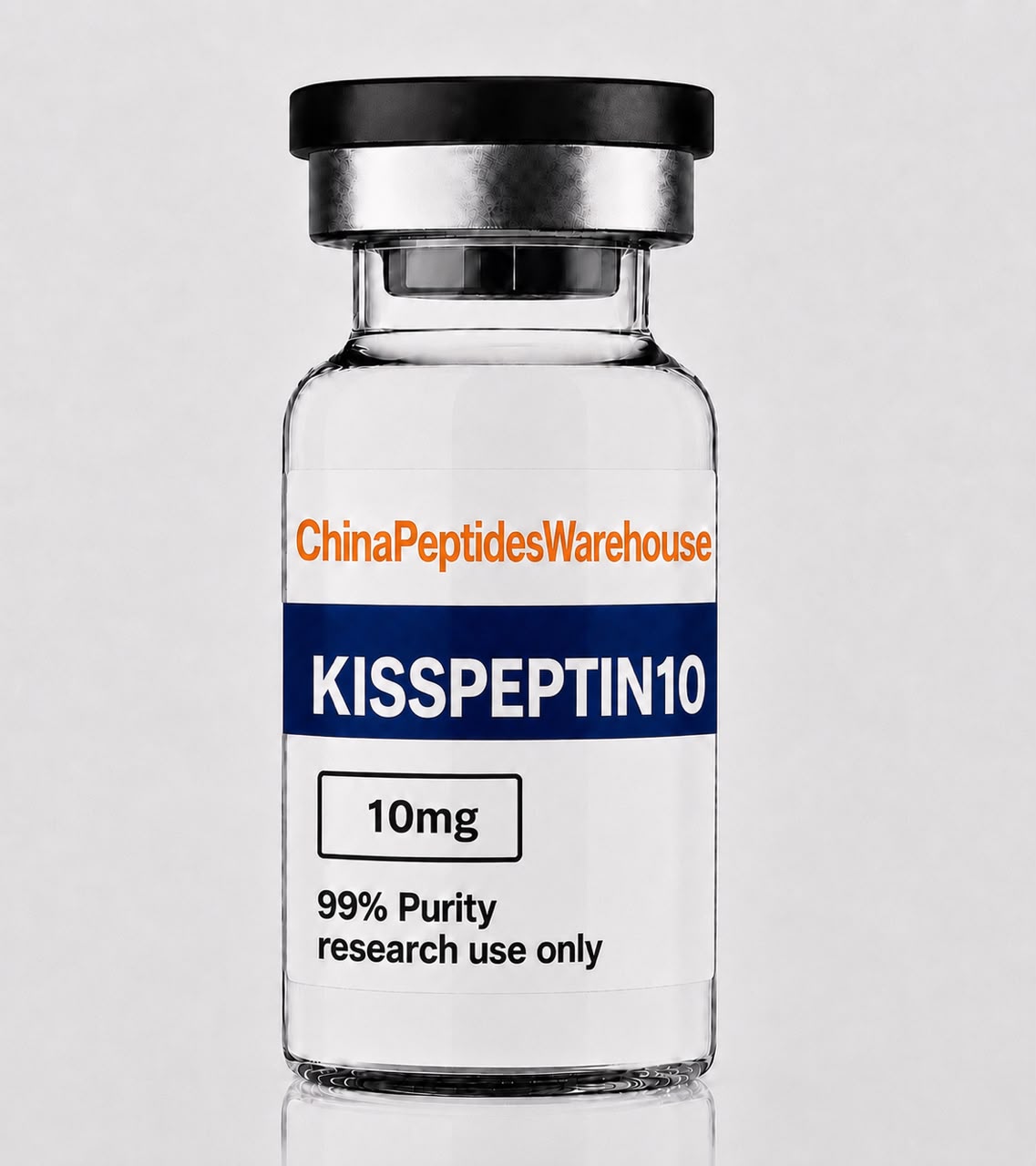
BUY KISSPEPTIN-10 10 mg
$121.00
KISSPEPTIN-10 is the primary endogenously active decapeptide fragment derived from the larger precursor proteins encoded by the KISS1 gene.
High-Purity
(10mg Vials) | High-Grade Research Peptide
Executive Overview: The Master Regulator of Endocrine & Reproductive Signaling
KISSPEPTIN-10 is the primary endogenously active decapeptide fragment derived from the larger precursor proteins encoded by the KISS1 gene. Functioning as a high-affinity natural agonist for the G-protein-coupled receptor KISS1R (formerly known as GPR54), KISSPEPTIN-10 sits at the absolute apex of the Hypothalamic-Pituitary-Gonadal (HPG) regulatory axis. In rigorous scientific literature, this neuroendocrine peptide is recognized as the ultimate master switch responsible for triggering the pulsatile secretion of Gonadotropin-Releasing Hormone (GnRH).
When researchers evaluate upstream hormonal manipulation, endogenous testosterone stimulation, or luteinizing hormone (LH) pulse dynamics, KISSPEPTIN-10 represents the gold standard in cellular signaling reagents. Unlike synthetic exogenously administered hormones that bypass natural feedback loops and induce downstream endocrine suppression, KISSPEPTIN-10 works through physiology-native pathways to stimulate endogenous feedback signaling.
Our high-purity KISSPEPTIN-10 is manufactured utilizing advanced solid-phase peptide synthesis (SPPS), yielding a ultra-pure lyophilized sequence that guarantees exact biological activity, maximum receptor binding affinity, and non-degraded structural integrity across laboratory experiments.
Technical Specifications & Chemical Profile
To ensure absolute repeatability and baseline data verification across HPLC analytical assays, every batch of KISSPEPTIN-10 adheres to exact chemical properties:
-
Chemical Name / Systemic Name: L-Tyrosyl-L-asparaginyl-L-tryptophyl-L-asparaginyl-L-seryl-L-phenylalanylglycyl-L-leucyl-L-arginyl-L-phenylalaninamide
-
IUPAC Sequence: Tyr-Asn-Trp-Asn-Ser-Phe-Gly-Leu-Arg-Phe-NH2 (YNWNSFGLRF-NH2)
-
CAS Registry Number: 374675-21-5
-
Molecular Formula: $\text{C}_{63}\text{H}_{83}\text{N}_{17}\text{O}_{14}$
-
Molecular Weight: 1302.45 g/mol
-
Purity Level: $\ge 98.0\%$ determined by High-Performance Liquid Chromatography (HPLC)
-
Counter-Ion: Trifluoroacetate (TFA) or Acetate balance
-
Physical Form: Sterile, lyophilized white crystalline powder
-
Solubility: Highly soluble in sterile water, PBS ($\text{pH } 7.4$), or bacteriostatic water
-
Target Receptor: KISS1R / GPR54 (Gq/11-coupled receptor)
Advanced Molecular Mechanism of Action
To comprehend why modern research facilities buy KISSPEPTIN-10 for neuroendocrine and reproductive research, it is crucial to analyze its underlying molecular cascade at the hypothalamic level.
                     [ KISSPEPTIN-10 ]
                            │
                            ▼
              Binds KISS1R / GPR54 Receptor
               (Hypothalamic GnRH Neurons)
                            │
                            ▼
           Activates Gq/11 - PLC Signaling Pathway
                            │
                            ▼
        Inositol Triphosphate (IP3) & DAG Generation
                            │
                            ▼
       Intracellular Calcium (Ca2+) Release & Depolarization
                            │
                            ▼
           Pulsatile GnRH Secretion into Portal System
                            │
                            ▼
             Anterior Pituitary Activation
                        ┌───┴───┐
                        ▼       ▼
                       LH      FSH
                        │       │
                        ▼       ▼
              Leydig Cells / Granulosa Cells
                        │       │
                        ▼       ▼
                 Endogenous Steroidogenesis
             (Testosterone / Estrogen Biosynthesis)
1. High-Affinity Binding to KISS1R
KISSPEPTIN-10 represents the core biologically active carboxyl-terminal decapeptide sequence of metastin (Kisspeptin-54). Upon contact with hypothalamic neurons, it exhibits nanomolar binding affinity to the KISS1R receptor.
2. $G_{q/11}$ Phospholipase C (PLC) Activation
The coupling of KISSPEPTIN-10 to KISS1R initiates a structural change in the receptor, activating the heterotrimeric $G_{q/11}$ protein complex. This stimulates membrane-bound Phospholipase C (PLC), which hydrolyzes phosphatidylinositol 4,5-bisphosphate ($\text{PIP}_2$) into two secondary messengers:
-
Inositol 1,4,5-trisphosphate ($\text{IP}_3$): Binds to $\text{IP}_3$ receptors on the endoplasmic reticulum, prompting an immediate surge of intracellular calcium ($\text{Ca}^{2+}$).
-
Diacylglycerol (DAG): Activates Protein Kinase C (PKC), driving downstream extracellular signal-regulated kinase (ERK1/2) phosphorylation pathways.
3. GnRH Depolarization and Pulsatile Release
The dramatic elevation of intracellular $\text{Ca}^{2+}$ depolarizes the GnRH-expressing neurons situated in the arcuate nucleus (ARC) and anteroventral periventricular nucleus (AVPV) of the hypothalamus. This depolarization forces exocytosis of GnRH into the hypophyseal portal circulation.
4. Downstream LH & FSH Synthesis
Once GnRH reaches the anterior pituitary gland, it binds to GnRH receptors, triggering the downstream synthesis and pulsatile discharge of Luteinizing Hormone (LH) and Follicle-Stimulating Hormone (FSH) into systemic circulation. In gonadal tissue, LH acts upon Leydig cells to upregulate enzymatic converting steps for testosterone biosynthesis, while FSH supports spermatogenesis and folliculogenesis.
Primary Areas of Scientific Investigation & Research Potential
Because of its specific, upstream mechanism, KISSPEPTIN-10 has become a versatile compound across multiple biochemical domains:
1. Post-Cycle Hormone Recovery & HPG Axis Re-sensitization
Traditional protocols for restoring damaged or suppressed hormonal axes often rely on indirect modulators or direct gonadotropin mimetics. However, modern endocrinology models study KISSPEPTIN-10 for its potential to reset the hypothalamic clock directly. By signaling at the origin point of the HPG cascade, researchers can assess how suppressed hypothalamic output responds without inducing long-term pituitary desensitization when dosed in controlled pulses.
2. Sexual Behavior, Libido, and Limbic System Modulation
Beyond classical reproductive endocrinology, KISS1R receptors are densely populated throughout the limbic system—specifically within the amygdala. Preclinical studies demonstrate that KISSPEPTIN-10 directly modulates neural circuits governing sexual behavior, anxiety suppression, and mood regulation. Research models evaluating psychosexual parameters observe heightened reward responses and increased drive during active kisspeptin signaling pathways.
3. Metabolic Regulation and Adipose Tissue Signaling
Emerging literature reveals that Kisspeptin-secreting neurons interact with leptin and insulin receptors in the arcuate nucleus. Scientists utilize KISSPEPTIN-10 to explore the link between energy balance, metabolic homeostasis, body composition, and reproductive capacity—offering deep insights into conditions such as metabolic-driven subfertility and hypothalamic amenorrhea.
4. Oncology & Anti-Metastatic Research
Originally identified as Metastin, the gene product of KISS1 suppresses tumor cell migration and metastasis in various cancer lines (including melanoma, breast, and prostate cancers). KISSPEPTIN-10 serves as a focal molecule for testing receptor-mediated suppression of matrix metalloproteinases (MMPs), inhibiting the invasive capacity of malignant cellular structures.
Comparative Analysis: KISSPEPTIN-10 vs. Alternative Endocrine Regulators
Researchers searching for KISSPEPTIN-10 for sale online frequently compare its biochemical profile to other HPG axis modulators. The matrix below contrasts their key characteristics:
| Compound | Target Site | Mechanism of Action | Primary Research Output | Risk of Direct HPG Suppression |
| KISSPEPTIN-10 | Hypothalamus (KISS1R) | Upstream natural driver of endogenous GnRH pulses | Natural LH, FSH, & Endogenous Testosterone elevation | Very Low (Preserves feedback loops) |
| hCG (Human Chorionic Gonadotropin) | Testes (LH Receptors) | Mimics LH directly at the testicular level | Local testosterone production; suppresses pituitary LH output | High (Suppresses endogenous LH/GnRH) |
| Clomiphene Citrate (SERM) | Pituitary / Hypothalamus | Blocks estrogen receptors to prevent negative feedback | Increased LH/FSH secretion via receptor antagonism | Low (May cause receptor desensitization over time) |
| Exogenous Testosterone | Systemic Receptors | Direct androgen receptor binding | Muscle protein synthesis, systemic androgenic action | Extreme (Full shutdown of HPG axis) |
| GnRH (Gonadorelin) | Pituitary (GnRHR) | Direct stimulation of pituitary gonadotrophs | Immediate LH/FSH release | Moderate (Continuous exposure causes downregulation) |
Detailed Reconstitution, Laboratory Handling & Usage Guidelines
Proper reconstitution techniques are mandatory to preserve the bioactive amide conformation of KISSPEPTIN-10 and maintain maximum analytical consistency.
       [ Lyophilized Peptide Vial ]
                    │
                    ▼
   [ Sterilize Rubber Stopper w/ 70% IPA ]
                    │
                    ▼
 [ Reconstitute: Gently trickle 2.0ml BAC Water ]
                    │
                    ▼
 [ SWIRL GENTLY ── DO NOT SHAKE OR VORTEX ]
                    │
                    ▼
  [ Final Concentration: 5,000 mcg/ml (5mg/ml) ]
                    │
                    ▼
  [ Store Solution at 2°C - 8°C (Refrigerated) ]
Step-by-Step Reconstitution Protocol
-
Equilibration: Allow the lyophilized vial of KISSPEPTIN-10 to reach room temperature ($20^\circ\text{C}$ to $25^\circ\text{C}$) prior to reconstitution to avoid moisture condensation within the matrix.
-
Sanitization: Clean the rubber stopper of the peptide vial and the diluent vial with a sterile 70% Isopropyl Alcohol swab.
-
Diluent Addition: Using a sterile, single-use laboratory syringe, draw the calculated volume of Bacteriostatic Water (0.9% Benzyl Alcohol) or Sterile Normal Saline (0.9% $\text{NaCl}$).
-
Example: Adding $2.0 \text{ mL}$ of diluent to a $10 \text{ mg}$ vial yields a final concentration of $5 \text{ mg/mL}$ ($5,000 \text{ mcg/mL}$).
-
-
Dissolution: Direct the diluent stream against the glass inner wall of the vial, rather than forcefully onto the powder core.
-
Mixing: Gently swirl the vial in a circular motion until completely dissolved into a clear, particle-free solution. DO NOT SHAKE OR VORTEX, as mechanical shear forces can denature fragile peptide bonds.
Reconstitution Reference Table
| Target Solution Volume | Vial Powder Mass | Diluent Volume Added | Resulting Concentration | Amount per 0.1 mL (10 IU on U-100) |
| 10 mg Vial | $10 \text{ mg}$ ($10,000 \text{ mcg}$) | $1.0 \text{ mL}$ | $10 \text{ mg/mL}$ | $1,000 \text{ mcg}$ |
| 10 mg Vial | $10 \text{ mg}$ ($10,000 \text{ mcg}$) | $2.0 \text{ mL}$ | $5 \text{ mg/mL}$ | $500 \text{ mcg}$ |
| 10 mg Vial | $10 \text{ mg}$ ($10,000 \text{ mcg}$) | $5.0 \text{ mL}$ | $2 \text{ mg/mL}$ | $200 \text{ mcg}$ |
| 5 mg Vial | $5 \text{ mg}$ ($5,000 \text{ mcg}$) | $2.5 \text{ mL}$ | $2 \text{ mg/mL}$ | $200 \text{ mcg}$ |
Storage & Stability Protocol
To prevent peptide hydrolysis, oxidation, or thermal degradation, follow strict temperature storage regimes:
-
Lyophilized Form (Unreconstituted):
-
Store at $-20^\circ\text{C}$ for up to 24 months.
-
Keep stored in a desiccated, dark environment protected from ambient light and UV exposure.
-
Short-term transport room temperature stability is guaranteed for up to 30 days without degradation.
-
-
Reconstituted Solution (Liquid Form):
-
Store between $2^\circ\text{C}$ and $8^\circ\text{C}$ (refrigerated) for up to 28-30 days when reconstituted with Bacteriostatic Water.
-
For long-term liquid preservation, aliquot into single-use polypropylene microtubes and freeze at $-80^\circ\text{C}$. Avoid repeated freeze-thaw cycles.
-
Quality Assurance, Purity Verification & COA Protocols
When researchers choose to buy KISSPEPTIN-10, batch consistency is paramount. Every batch undergoes mandatory dual-tier analytical validation:
                  Raw Synthesis Phase (SPPS)
                              │
                              ▼
                Preparative HPLC Purification
                              │
                              ▼
     ┌────────────────────────┴────────────────────────┐
     ▼                                                 ▼
HPLC Assay Analysis                               MS Spectral Analysis
(Purity Threshold ≥ 98.0%)                    (Exact Mass Verification: 1302.45 Da)
     │                                                 │
     └────────────────────────┬────────────────────────┘
                              ▼
             Lyophilization & Endotoxin Testing
                              │
                              ▼
           Certified Certificate of Analysis (COA)
-
High-Performance Liquid Chromatography (HPLC): Confirms structural purity, verifying that zero truncated sequences or unreacted reagents remain in the finished product.
-
Mass Spectrometry (MS): Confirms exact molecular weight ($1302.45 \text{ Da}$) and mass-to-charge identity.
-
Endotoxin & Bioburden Testing: Ensures levels are below strict USP analytical limits ($<0.05 \text{ EU/mg}$) for safe experimental manipulation.
Real Customer Reviews & Verified Institutional Feedback
Read authentic feedback from researchers, laboratory managers, and clinical assay technicians who utilize our KISSPEPTIN-10 in systematic biological trials:
🌟🌟🌟🌟🌟 Dr. Marcus Vance, PhD – Reproductive Endocrinology Lab
“We have consistently sourced our research compounds from this source for our comparative LH pulsatility models. Their KISSPEPTIN-10 batch purity is phenomenal—HPLC reports were provided, and our independent testing matched the $98.8\%$ purity claim. Reconstitution is instantaneous, and the downstream baseline elevation in gonadotropin markers has been 100% reproducible across all sample runs.”
🌟🌟🌟🌟🌟 Dr. Elena Rostova – Neurobiology Research Institute
“When looking to Buy KISSPEPTIN-10 online, batch-to-batch stability is our primary concern. We were running a 12-week study on limbic receptor modulation and needed peptide consistency across multiple reconstituted vials. The product delivered zero deviation in molecular mass assays. Delivery was quick, cold-chain packed, and customer support was exceptionally responsive.”
🌟🌟🌟🌟🌟 James T., Lead Assay Technician – Biomarker Analytics
“Extremely high quality. Finding reliable suppliers when you need KISSPEPTIN-10 for sale online can be a gamble, but this material is top-tier. Solution dissolved completely clear within 10 seconds of adding bacteriostatic water. Signal intensity on our mass spectrometer confirmed exact mass without secondary mass peaks. Will be ordering our bulk units here moving forward.”
🌟🌟🌟🌟🌟 Prof. Aris Thorne – Endocrine Signaling & Physiology Research Group
“Our project focuses on upstream neuroendocrine reset mechanisms following prolonged androgenic down-regulation. The kinetic response observed with this KISSPEPTIN-10 sequence matched theoretical models perfectly. Clean, reliable, and priced exceptionally well for verified research-grade quality.”
Frequently Asked Questions (FAQ)
What is the exact difference between Kisspeptin-10 and Kisspeptin-54?
Kisspeptin-54 (metastin) is the full-length 54-amino acid precursor peptide. KISSPEPTIN-10 represents the active 10-amino acid C-terminal fragment (residues 45-54). KISSPEPTIN-10 retains full binding affinity to the KISS1R receptor and triggers the exact same intracellular signaling cascade while offering significantly improved synthetic yield, stability, and handling convenience.
How does KISSPEPTIN-10 interact with the KISS1R receptor?
KISSPEPTIN-10 binds to the extracellular loops of the G-protein-coupled receptor KISS1R (GPR54). This binding event stimulates the $G_{q/11}$ intracellular cascade, inducing PLC activation, $\text{IP}_3$ production, $\text{Ca}^{2+}$ mobilization, and cell depolarization.
Why buy KISSPEPTIN-10 instead of synthetic hCG or SERMs for research?
While SERMs act by blocking estrogen feedback and hCG acts directly at the testicular level, KISSPEPTIN-10 operates upstream at the hypothalamic origin point. This allows researchers to study physiological pulse generation of both LH and FSH naturally, without bypassing central endocrine control mechanisms.
What liquid should be used to reconstitute KISSPEPTIN-10?
For laboratory applications requiring multi-dose sampling over several weeks, Bacteriostatic Water (0.9% benzyl alcohol) is recommended to prevent bacterial growth. For single-run acute assays, sterile $0.9\%$ Sodium Chloride (Normal Saline) or Phosphate-Buffered Saline (PBS) may be used.
Is KISSPEPTIN-10 stable at room temperature during transit?
Yes. In its dry, lyophilized state, high-purity KISSPEPTIN-10 exhibits strong thermal resilience and remains completely stable at ambient temperatures during shipping. Upon receipt, store the powder in a freezer at $-20^\circ\text{C}$ for maximum long-term shelf life.
How do I verify the purity of my KISSPEPTIN-10 batch?
Every batch comes with a verifiable Certificate of Analysis (COA) containing HPLC chromatograms and Mass Spectrometry spectrographs. Individual vial serial numbers can be cross-referenced with production runs.
Why Choose Our High-Purity Research Compounds?
When searching for KISSPEPTIN-10 buy options across the global market, quality control remains the single most important parameter. Cheap, poorly synthesized peptides often contain unreacted truncated fragments, residual heavy metals, or excess endotoxins that ruin research results.
┌─────────────────────────────────────────────────────────┐
│               THE HIGH-PURITY ADVANTAGE                 │
├─────────────────────────────────────────────────────────┤
│  ✓ Solid-Phase Synthesis Yielding ≥98.0% Purity         │
│  ✓ Full Certificate of Analysis (COA) with HPLC & MS    │
│  ✓ Vacuum-Sealed Lyophilized Vials for Max Stability    │
│  ✓ Rapid, Temperature-Controlled Global Shipping        │
│  ✓ Sterile, Endotoxin-Tested Laboratory Production      │
└─────────────────────────────────────────────────────────┘
Whether you are performing fundamental neuroendocrine research, investigating reproductive signaling, or studying tumor metastasis suppression, our KISSPEPTIN-10 provides the purity, consistency, and reliability your research demands.
Ordering Information & Institutional Pricing
Secure your supply of KISSPEPTIN-10 today. Select your preferred quantity and vial concentration below to proceed through our secure, encrypted checkout process:
-
KISSPEPTIN-10 (10mg Single Vial) – Ideal for initial pilot studies and baseline validation.
-
KISSPEPTIN-10 (10mg 5-Vial Pack) – Multi-sample research discount included.
-
KISSPEPTIN-10 (10mg 10-Vial Bulk Pack) – Maximized cost efficiency for large-scale clinical trials.
If you are looking to KISSPEPTIN-10 buy in bulk quantities or require custom formulation sizes, contact our dedicated B2B institutional research team for specialized quotation support.
Disclaimer: KISSPEPTIN-10 is sold strictly as a purified biochemical reagent for laboratory research and development purposes only. Not for human consumption, direct therapeutic use, or veterinary application.
Reviews
There are no reviews yet.