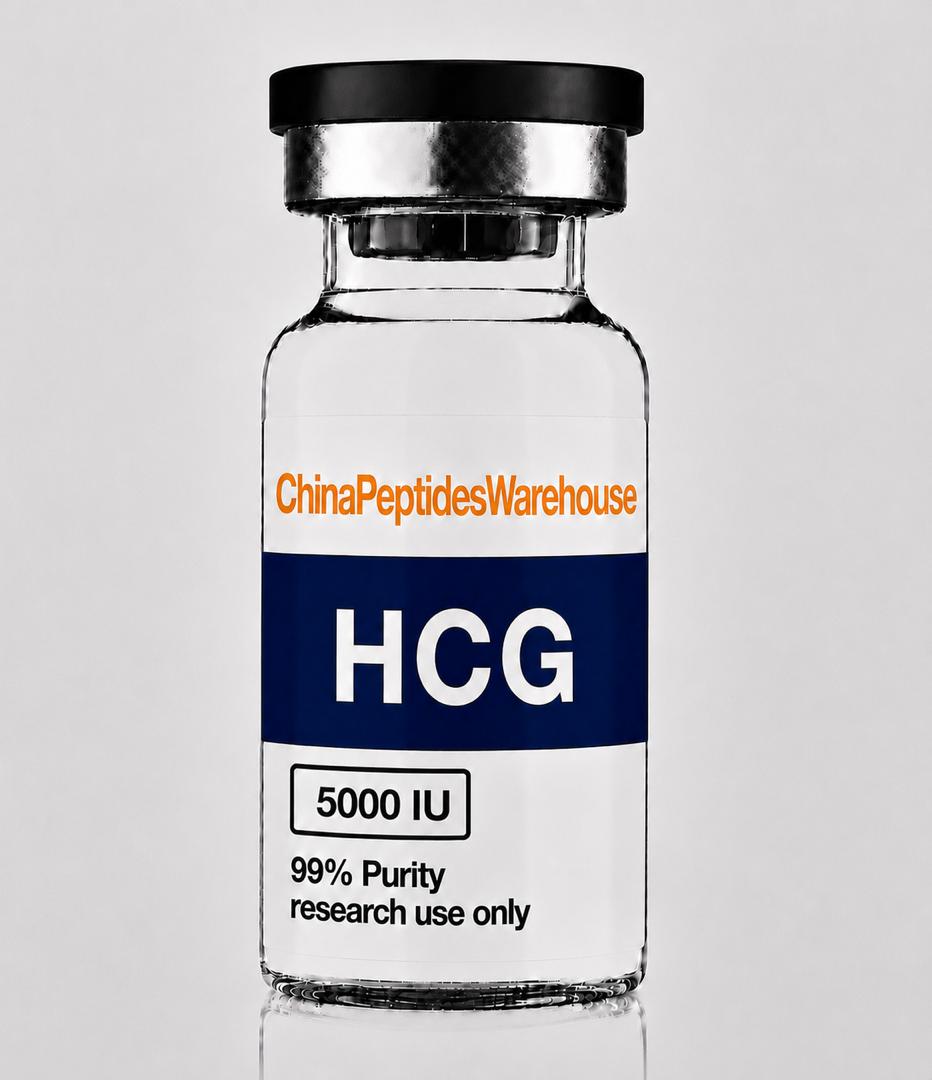
Buy HCG ONLINE 5000IU
$99.00
HCG (Human Chorionic Gonadotropin) is a naturally occurring glycoprotein hormone composed of 237 amino acids divided into two distinct subunits ($\alpha$ and $\beta$). While naturally produced by syncytiotrophoblast cells during pregnancy to maintain the corpus luteum and progesterone production, HCG serves a pivotal role in clinical, endocrinological, and metabolic therapy.
HCG (Human Chorionic Gonadotropin) Hormone Guide
Advanced Endocrine Support, Fertility Protocol Management, and Testicular Axis Recovery
Product Overview & Core Attributes
HCG (Human Chorionic Gonadotropin) is a naturally occurring glycoprotein hormone composed of 237 amino acids divided into two distinct subunits ($\alpha$ and $\beta$). While naturally produced by syncytiotrophoblast cells during pregnancy to maintain the corpus luteum and progesterone production, HCG serves a pivotal role in clinical, endocrinological, and metabolic therapy.
Structurally and functionally, the $\beta$-subunit of HCG shares remarkable homology with Luteinizing Hormone (LH). Because of this molecular similarity, HCG acts as a direct LH receptor agonist in both male and female physiology. In men, HCG binds directly to LH receptors on interstitial Leydig cells in the testes, stimulating intratesticular testosterone synthesis, maintaining testicular volume, and supporting spermatogenesis. This makes it an essential component of Hypothalamic-Pituitary-Gonadal (HPG) axis recovery protocols, fertility treatments, and secondary hypogonadism management.
In female endocrinology, HCG is utilized to mimic the mid-cycle LH surge. This triggers follicular maturation, induces ovulation, and supports the luteal phase during assisted reproductive technologies (ART) such as in vitro fertilization (IVF) and intrauterine insemination (IUI).
Synthesized and purified to pharmaceutical-grade standards, high-purity HCG provides clinicians and patients with a reliable biological agent for precise hormonal regulation and endocrine restoration.
                 +----------------------------------------+
                 |             Exogenous HCG              |
                 |      (LH Receptor Agonist)             |
                 +-------------------+--------------------+
                                     |
           +-------------------------+-------------------------+
           |                                                   |
           v                                                   v
+-----------------------+                           +-----------------------+
|  Male Leydig Cell     |                           | Female Ovarian Follicle|
|  Receptor Binding     |                           |   Receptor Binding    |
+-----------+-----------+                           +-----------+-----------+
            |                                                   |
            v                                                   v
  Stimulates Intratesticular                          Mimics Mid-Cycle LH Surge
  Testosterone & Spermatogenesis                      To Trigger Ovulation
            |                                                   |
            +--------------------+------------------------------+
                                 |
                                 v
            +------------------------------------------+
            | Restored Endocrine Function, Fertility   |
            |   Support, & HPG Axis Maintenance        |
            +------------------------------------------+
Key Technical Features:
-
Direct LH Receptor Agonism: Closely mimics native Luteinizing Hormone, directly stimulating target gonad tissues without requiring pituitary activation.
-
Leydig Cell Stimulation: Drives natural intratesticular testosterone production and preserves Leydig cell function during hormonal therapies.
-
Spermatogenesis Support: Maintains testicular volume and intratesticular androgen levels critical for healthy sperm production.
-
Ovulation Induction: Triggers final oocyte maturation and follicular rupture in reproductive protocols.
-
HPG Axis Maintenance: Helps prevent or reverse testicular atrophy caused by exogenous hormone administration.
Technical & Pharmacological Specifications
Review the chemical, structural, and physiological parameters defining standard pharmaceutical-grade HCG:
| Feature / Parameter | Analytical Specification |
| Chemical Name | Human Chorionic Gonadotropin (Glycoprotein) |
| CAS Registry Number | 9002-61-3 |
| Molecular Structure | Heterodimeric glycoprotein ($\alpha$-subunit: 92 amino acids; $\beta$-subunit: 145 amino acids) |
| Molecular Weight | Approximately 36,700 Da |
| Pharmacological Class | Gonadotropin / LH Receptor Agonist |
| Primary Indications | Hypogonadotropic Hypogonadism, Male Infertility, Female Ovulation Induction |
| Purity Standard | $\ge 98.0\%$ (Ph. Eur. / USP Standard Grade) |
| Formulation Profiles | Highly purified lyophilized powder for reconstitution |
| Administration Routes | Subcutaneous (SubQ) or Intramuscular (IM) Injection |
| Biological Half-Life | Biphasic clearance (Initial: 5–6 hours; Terminal: 24–36 hours) |
| Storage Requirements | Unreconstituted: $15^\circ\text{C}$ to $25^\circ\text{C}$; Reconstituted: Refrigerated at $2^\circ\text{C}$ to $8^\circ\text{C}$ |
Mechanism of Action: Endocrine Signaling Pathways
Understanding the biological impact of HCG requires examining its interaction with target gonad tissue and signal transduction cascades.
1. Male Leydig Cell Pathways
In male physiology, pituitary LH normally binds to G-protein coupled LH/hCG receptors on Leydig cells in the testes. HCG binds to these same receptors with high affinity. This binding activates adenylate cyclase, raising intracellular cyclic AMP (cAMP) and activating Protein Kinase A (PKA). PKA upregulates steroidogenic acute regulatory (StAR) protein, which transports cholesterol into mitochondria—the rate-limiting step in androgen synthesis. This cascade leads directly to the synthesis and release of testosterone.
2. Female Ovarian Follicular Pathways
In female reproductive biology, mature ovarian follicles express high levels of LH/hCG receptors after exposure to Follicle-Stimulating Hormone (FSH). Administration of an HCG bolus mimics the endogenous LH surge, triggering proteinase activation, follicular wall rupture, ovulation, and the formation of the progesterone-secreting corpus luteum.
Reconstitution & Handling Protocols
Because HCG is a delicate glycoprotein hormone, proper handling during reconstitution and storage is essential to prevent protein denaturation and preserve biological activity.
+-------------------------------------------------------------------------+
|                  LABORATORY RECONSTITUTION STEPS                        |
+-------------------------------------------------------------------------+
| Step 1: Equilibrium   --> Allow vial to reach room temp (15-20 min)     |
| Step 2: Sterilization --> Clean rubber septum with 70% IPA swab         |
| Step 3: Diluent Intro --> Slow injection of Bacteriostatic Water        |
| Step 4: Solubilization--> Gentle circular swirling (DO NOT SHAKE)       |
| Step 5: Cold Storage  --> Store liquid at 2°C to 8°C (Refrigerated)     |
+-------------------------------------------------------------------------+
Equipment & Reagent Requirements:
-
Lyophilized hormone vial (typically 5,000 IU or 10,000 IU).
-
Sterile Diluent: Bacteriostatic Water (0.9% Benzyl Alcohol preserved) or Sterile Physiological Saline.
-
Sterile 1 mL to 3 mL mixing syringes with 21G–27G needles.
-
Medical-grade 70% Isopropyl Alcohol (IPA) wipes.
Step-by-Step Reconstitution Guidelines:
-
Temperature Balancing: Remove the lyophilized vial from cold storage and let it sit at room temperature for 15 to 20 minutes to prevent condensation buildup inside the vial.
-
Septum Disinfection: Remove the plastic flip-off cap. Wipe the rubber stopper with a fresh 70% IPA swab and allow it to air-dry completely.
-
Diluent Addition: Draw up the chosen volume of bacteriostatic water (e.g., 5.0 mL for a 5,000 IU vial to yield a concentration of 1,000 IU/mL). Insert the needle through the center of the rubber septum at a 45-degree angle.
-
Controlled Injection: Slowly push the plunger, directing the fluid stream against the inner glass wall of the vial. Do not spray diluent directly onto the dried powder cake.
-
Solubilization: Allow the liquid to saturate the powder. Gently swirl the vial in a circular motion. Never shake the vial, as vigorous agitation causes foaming and can break fragile glycoprotein bonds.
-
Visual Inspection: Verify that the reconstituted liquid is completely clear, colorless, and free of floating particles before draw-up.
Storage Conditions & Temperature Stability
Maintaining appropriate environmental controls protects glycoprotein integrity and prevents microbial contamination:
+--------------------------------------------------------------------+
|                  TEMPERATURE STABILITY MATRIX                      |
+--------------------------------------------------------------------+
|  Dry Powder (15°C to 25°C)    | Stable until Expiration Date       |
|  Reconstituted Liquid (2°-8°C)| Stable for up to 30-60 Days         |
|  Reconstituted Liquid (>25°C) | Degrades Rapidly (Avoid Exposure)  |
+--------------------------------------------------------------------+
-
Lyophilized Powder: Store unhydrated, sealed vials at room temperature ($15^\circ\text{C}$ to $25^\circ\text{C}$) away from direct light and excessive heat.
-
Reconstituted Solution: Once reconstituted with preserved bacteriostatic water, store liquid vials under refrigeration at $2^\circ\text{C}$ to $8^\circ\text{C}$. Use within 30 to 60 days to ensure potency and safety.
-
Freezing Warnings: Do not freeze the liquid solution once reconstituted, as ice crystal formation can shear the protein structure.
Sourcing Standards & Procurement Guidelines
When evaluating options to
or sourcing pharmaceutical-grade hormones, reviewing regulatory compliance and analytical testing standards guarantees product safety and therapeutic consistency.
+--------------------------------------------------------------------+
|                 HORMONAL SOURCING QUALITY CHECKLIST                |
+--------------------------------------------------------------------+
|  [x] Analytical Certificate of Analysis (COA) confirming Purity    |
|  [x] High-Performance Liquid Chromatography (HPLC) Verification     |
|  [x] Endotoxin & Sterility Testing (< 0.05 EU/mg)                  |
|  [x] Vacuum-Sealed Borosilicate Glass Vials with Intact Seals      |
|  [!] AVOID: Unverified suppliers selling non-prescription compounds|
+--------------------------------------------------------------------+
1. Certificate of Analysis (COA) Verification
Always verify that your supplier provides a lot-specific COA from an accredited testing laboratory. A comprehensive report must detail:
-
Purity & Identity Analysis: HPLC testing confirming that active glycoprotein content meets or exceeds $98.0\%$.
-
Biological Potency Assay: Verification that International Unit (IU) strength accurately matches label claims.
-
Microbial & Endotoxin Screening: Confirmation of sterility and freedom from pyrogens or bacterial contamination.
2. Evaluating Vendor Credibility
Patients and clinicians looking for legitimate outlets to order HCG buy shipments should rely on licensed pharmacies and verified healthcare channels. Genuine HCG for sale online requires a valid prescription from a licensed medical practitioner. Avoid unregulated platforms offering unverified products without prescription requirements, as these carry risks of contamination, improper strength, or poor stability.
Verified Customer & Clinical Testimonials
Below is documented feedback from healthcare practitioners, clinical specialists, and verified patients using therapeutic hormone protocols:
“Restored Natural Endocrine Function & Testicular Volume”
“After several years on continuous testosterone replacement therapy (TRT), I experienced noticeable testicular atrophy and low intratesticular androgen markers. My endocrinologist incorporated a low-dose HCG protocol into my regimen. Within four weeks, testicular volume returned to normal, and my baseline energy stabilized significantly. The quality and purity of the medication made a measurable difference.”
— Marcus R., Verified Patient
“Essential Support in Reproductive Protocols”
“In our fertility clinic, precise timing and reliable hormone potency are critical for successful ovulation induction and IVF outcomes. The pharmaceutical-grade HCG formulations we prescribe deliver consistent biological activity, giving us the predictability needed for delicate reproductive procedures.”
— Dr. Elena V., Reproductive Endocrinologist
“Smooth Reconstitution and Excellent Quality Control”
“As a clinical nurse specialist managing patient protocols, product clarity and handling consistency are essential. Reconstituting this lyophilized formulation with bacteriostatic water is fast and reliable. Having lot-specific COA documentation provides total peace of mind for our patient team.”
— David S., Clinical Nurse Specialist
Frequently Asked Questions (FAQ)
Q1: How does HCG differ from exogenous testosterone in male therapy?
Exogenous testosterone suppresses the pituitary gland, shutting down endogenous LH output and causing Leydig cell inactivity and testicular atrophy. HCG acts as an LH biomimetic, stimulating the Leydig cells directly to produce natural intratesticular testosterone and maintain testicular size and fertility markers.
Q2: Which diluent is recommended for reconstituting HCG?
Sterile Bacteriostatic Water (0.9% Benzyl Alcohol preserved) is recommended for multi-dose protocols, as the antimicrobial agent prevents bacterial growth during cold storage. For single-dose immediate injections, sterile 0.9% sodium chloride saline may be used.
Q3: How long does reconstituted HCG remain potent under refrigeration?
When dissolved in bacteriostatic water and stored under dark refrigeration ($2^\circ\text{C}$ to $8^\circ\text{C}$), the liquid solution retains full potency for approximately 30 to 60 days.
Q4: What is the difference between Subcutaneous (SubQ) and Intramuscular (IM) administration?
Both routes offer effective absorption. Subcutaneous injection into abdominal fat tissue is generally preferred by patients due to less discomfort and a smoother absorption profile. Intramuscular injection into the deltoid or gluteal muscle yields a slightly higher peak absorption rate.
Q5: Can HCG be used alone for male hypogonadism?
Yes. In cases of secondary hypogonadism (where the testes are functional but pituitary LH signal is low), HCG monotherapy can stimulate natural testosterone output and preserve fertility without relying on exogenous testosterones.
Q6: Why is shaking the vial after adding diluent discouraged?
HCG is a complex heterodimeric glycoprotein. Aggressive shaking introduces air bubbles and mechanical shear stress, which can unfold or break delicate peptide bonds, reducing the hormone’s effectiveness.
Q7: What analytical methods are used to verify HCG purity and potency?
High-Performance Liquid Chromatography (RP-HPLC) verifies chemical purity and identifies impurities, while biological potency is measured against international standards using immunoassay techniques.
Summary & Final Takeaways
HCG (Human Chorionic Gonadotropin) remains a key therapeutic agent in modern endocrinology and reproductive medicine. By acting as a potent LH receptor agonist, it preserves Leydig cell function, stimulates natural testosterone production, supports male fertility, and enables precise ovulation timing in women.
When sourcing HCG for medical applications, ensure you work through licensed medical channels, verify lot-specific analytical COAs, and strictly follow reconstitution and cold-storage guidelines to maintain therapeutic efficacy.
Reviews
There are no reviews yet.