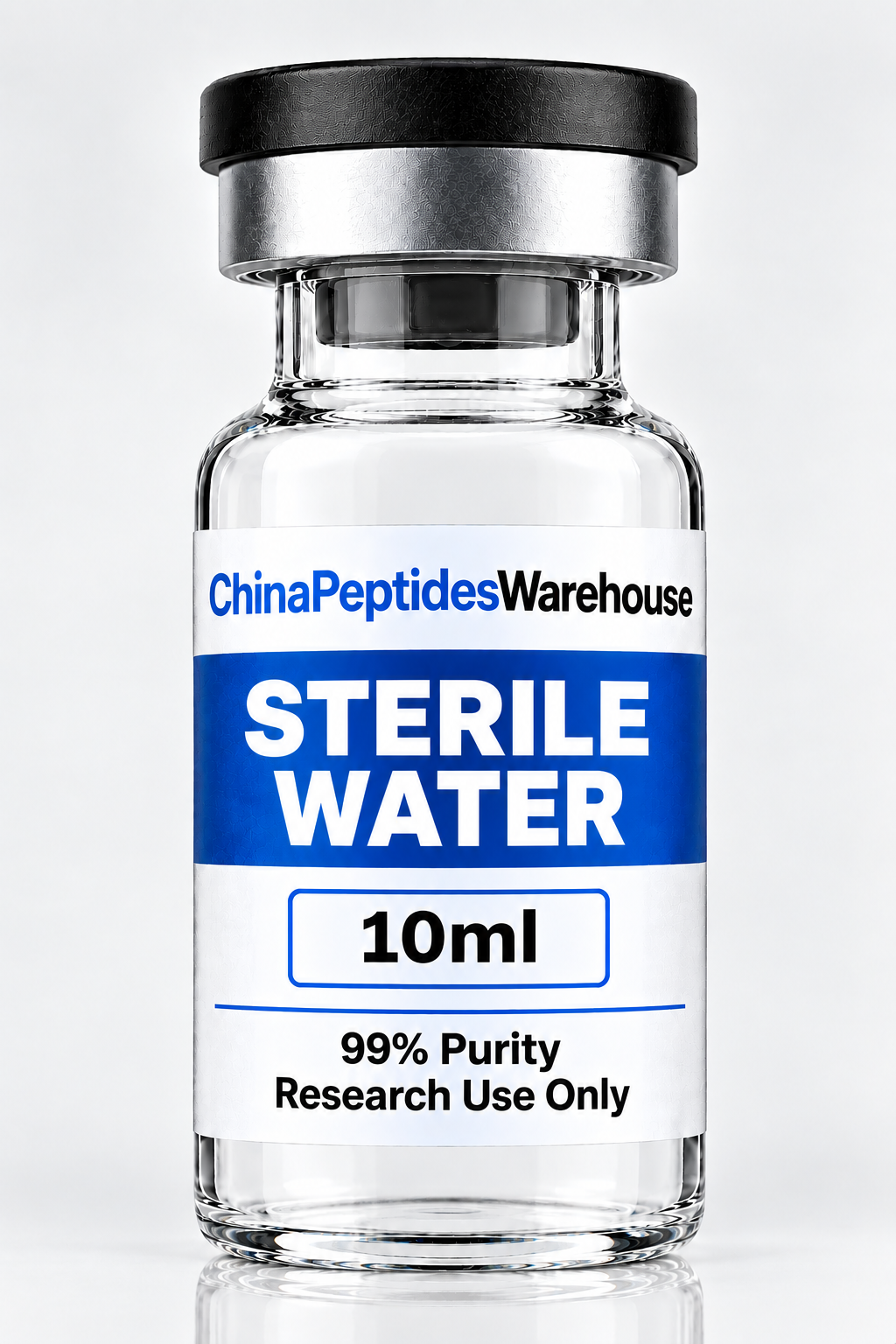
BUY STERILE WATER 1Oml
Original price was: $15.00.$11.00Current price is: $11.00.
# BUY STERILE WATER: The Ultimate Guide to Single-Use Reconstitution, Laboratory Standards, and Medical Safety
Whether preparing sensitive biological compounds, executing laboratory dilutions, or performing sterile wound irrigations, maintaining an absolute pathogen-free environment is critical. When searching for maximum chemical purity and zero-additive diluents, choosing to **BUY STERILE WATER** gives you immediate access to pyrogen-free, highly purified water engineered specifically for critical clinical and research applications.
Unlike tap water, distilled water, or deionized water, true Sterile Water for Injection (SWFI) undergoes rigorous multi-stage distillation and terminally sterilized processes. This guarantees the complete elimination of bacteria, viruses, fungi, mold spores, endotoxins, and dissolved mineral salts. Securing pure, unpreserved sterile water is essential when reconstituting fragile sensitive molecules that break down in the presence of benzyl alcohol or chemical preservatives.
—
Sterile Water for Injection USP is a non-pyrogenic, solute-free, clear preparation of pure $H_2O$ treated through vapor-compression or reverse-osmosis distillation. It contains no added antimicrobial agents, bacteriostatic preservatives, or stabilizing buffers.
“`
Purified Raw Water Feed
│
▼
Multi-Stage Distillation
(Thermal / Reverse Osmosis)
│
▼
Terminal Sterilization
(Autoclaved under High Pressure)
│
▼
Sterile Water for Injection
(0 Preservatives | Pyrogen-Free | Pure H₂O)
│
┌─────────────────────┼─────────────────────┐
▼ ▼ ▼
Single-Use Reconstitution Topical Irrigation Laboratory Dilution
(Immediate Injection) & Cleanroom Care & Sensor Testing
“`
### Essential Quality Parameters
1. **Non-Pyrogenic Guarantee:** Free of endotoxins (lipopolysaccharides) released by bacterial cell walls, protecting against systemic febrile reactions.
2. **Zero Solutes or Additives:** Contains $0.0\%$ sodium chloride, zero benzyl alcohol, and zero chemical preservatives, eliminating chemical interference with sensitive active compounds.
3. **Single-Use Design:** Because it lacks a bacteriostatic agent to suppress microbial growth after entry, it is designed for immediate, single-use application to guarantee uncompromised purity.
—
## Sterile Water vs. Bacteriostatic Water
Understanding the core distinction between different laboratory diluents prevents compound degradation and accidental contamination.
“`
┌─────────────────────────────┬─────────────────────────────────┬─────────────────────────────────┐
│ Feature / Attribute │ Sterile Water for Injection │ Bacteriostatic Water │
├─────────────────────────────┼─────────────────────────────────┼─────────────────────────────────┤
│ Active Ingredients │ Pure 100% Sterile H₂O │ Sterile H₂O + 0.9% Benzyl Alcohol│
│ Preservative Content │ None (0.0% Preservatives) │ 0.9% Benzyl Alcohol │
│ Usage Lifecycle │ Single-Use (Use Immediately) │ Multi-Dose (Up to 28 Days) │
│ Preservative Sensitivity │ Ideal for sensitive compounds │ Can denature fragile molecules │
│ Antimicrobial Defense │ None once opened │ Suppresses bacterial growth │
└─────────────────────────────┴─────────────────────────────────┴─────────────────────────────────┘
“`
While bacteriostatic water contains $0.9\%$ benzyl alcohol to permit multiple needle punctures over 28 days, some delicate bio-active compounds and specific cellular assays are destroyed by alcohol preservatives. In such cases, choosing to **BUY STERILE WATER** is mandatory to prevent chemical denaturation.
—
## Core Applications and Benefits
* **Single-Dose Reconstitution:** Safely dissolves freeze-dried compounds, hormones, and biological powders without exposure to chemical additives.
* **Preservative-Sensitive Formulations:** Protects fragile amino acid chains, enzymes, and sensitive proteins that aggregate or degrade when exposed to alcohol.
* **Sterile Medical & Clinical Irrigation:** Used in surgical environments, wound flushing, eye irrigation, and catheter maintenance where preservatives cause tissue irritation.
* **Precision Analytical Chemistry:** Serves as a pure control solvent for high-performance liquid chromatography (HPLC), mass spectrometry, and cell culture media preparation.
—
## Step-by-Step Reconstitution Protocol
When using single-use diluents for dissolving lyophilized powders, adhering to strict aseptic techniques protects your compounds from environmental contamination.
“`
┌─────────────────────────┬───────────────────────────────┬─────────────────────────────────────┐
│ Administration / Step │ Protocol Action │ Key Safety Rule │
├─────────────────────────┼───────────────────────────────┼─────────────────────────────────────┤
│ Step 1: Prep & Sanitize │ Wipe stoppers with 70% IPA │ Allow rubber stoppers to air dry │
│ Step 2: Draw Diluent │ Draw exact volume needed │ Use a fresh sterile syringe/needle │
│ Step 3: Reconstitution │ Direct liquid down vial wall │ Never drop liquid directly on powder│
│ Step 4: Dissolution │ Gently swirl until clear │ Never shake vigorously │
└─────────────────────────┴───────────────────────────────┴─────────────────────────────────────┘
“`
### 1. Preparation & Sanitization
* Sanitize your workspace with a hard-surface disinfectant spray.
* Thoroughly wipe the rubber stoppers of both the sterile diluent ampoule/vial and the target target vial using a fresh $70\%$ isopropyl alcohol swab. Allow them to air-dry completely.
### 2. Drawing and Mixing
* Using a fresh sterile syringe, draw the exact required volume (e.g., $1.0\text{ mL}$ to $2.0\text{ mL}$) of sterile water.
* Insert the needle through the stopper of the lyophilized target powder at a 45-degree angle.
* Slowly press the plunger, directing the stream down the inside glass wall of the vial to prevent foaming or structural shearing.
### 3. Dissolution & Immediate Usage
* Smoothly roll or swirl the vial between your palms until the lyophilized cake completely dissolves.
* **Important Notice:** Because unpreserved sterile water contains no antibacterial agent, any reconstituted solution must be administered immediately or used within 24 hours under strict refrigeration. Discard any unused remaining diluent liquid immediately after opening.
—
## Reconstituting Peptides with Sterile Water
When working with a specialized target peptide or sensitive protein strand, choosing the correct diluent determines whether the compound retains its structural integrity.
While many multi-dose protocols lean toward bacteriostatic water, specific applications demand unpreserved sterile water.
### Why Select Sterile Water for Peptide Research?
1. **Preventing Alcohol Denaturation:** Certain fragile peptide structures contain delicate secondary and tertiary folding patterns. Benzyl alcohol can disrupt these hydrophobic interactions, causing the peptide chain to misfold or precipitate out of solution.
2. **Single-Dose Animal & Cellular Models:** In pre-clinical research models, alcohol preservatives can induce localized cellular toxicity or alter receptor signaling. Using unpreserved sterile water ensures that pure peptide activity is measured without solvent interference.
3. **Immediate Administration:** When a peptide vial is reconstituted for immediate full-dose application, single-use sterile water provides maximum purity without exposing the subject to unnecessary chemical additives.
—
## Sourcing Standards: Verification Metrics Before Purchase
When preparing to **BUY STERILE WATER**, verifying that the product meets international pharmacopeia standards ensures that your assays and formulations remain uncontaminated.
### Critical Quality Checks
* **USP / EP Pharmacopeia Compliance:** Guarantees that production meets United States Pharmacopeia or European Pharmacopoeia standards for sterility and endotoxin limits.
* **Endotoxin Testing ($<0.25\text{ EU/mL}$):** Confirms that the product is completely pyrogen-free through Limulus Amebocyte Lysate (LAL) testing.
* **Hermetic Packaging:** Ensure the water is sealed in medical-grade glass ampoules or single-use plastic tear-off vials to prevent gas exchange or leaching.
* **Third-Party Certificates of Analysis (CoA):** Reputable suppliers publish lot-specific CoAs confirming purity, pH balance ($5.0 – 7.0$), and complete sterility.
—
## Real Customer Reviews
### Review 1: Exceptional Quality for Sensitive Assays
> **Verified Buyer:** Dr. Arthur P., Laboratory Director
> **Rating:** ★★★★★
> **Application:** Cellular Protein Assay
> “We frequently work with fragile enzyme complexes that degrade in preserved solvents. When we decided to **BUY STERILE WATER** from this platform, we tested the lot for endotoxins and chemical residue. The results were flawless. The single-use plastic vials are easy to open without glass splinters, and our protein stability markers have remained perfectly consistent.”
### Review 2: Perfect for Single-Dose Reconstitution Protocols
> **Verified Buyer:** Elena M.
> **Rating:** ★★★★★
> **Application:** Single-Use Reconstitution
> “I specifically required unpreserved water to dissolve a sensitive biological compound that reacts poorly to benzyl alcohol. The product arrived quickly, securely packed, and with clear lot numbers matching the CoA provided online. Reconstitution was fast, clear, and caused zero irritation. I will definitely continue to **BUY STERILE WATER** from this supplier.”
### Review 3: Reliable Shipping and Outstanding Purity
> **Verified Buyer:** Marcus V.
> **Rating:** ★★★★★
> **Application:** Clinical Wound Care & Dilution
> “Finding reliable, medical-grade sterile water in sealed single-use units can be challenging. This vendor provides fast shipping, excellent protective packaging, and verifiable purity certificates. The vials pop open cleanly, providing fresh, zero-additive sterile water every time. Highly recommended for anyone needing pure, pyrogen-free diluents.”
—
## Frequently Asked Questions (FAQ)
### Can I use sterile water for multi-dose vials over several weeks?
No. Sterile water contains zero preservatives. Once the seal is punctured or broken, exposure to air can allow airborne bacteria to multiply. For multi-dose vials drawn over days or weeks, bacteriostatic water containing $0.9\%$ benzyl alcohol should be used unless contraindicated.
### Why is plain sterile water hypotonic?
Sterile Water for Injection is pure water without added electrolytes or salts, giving it an osmolarity of $0\text{ mOsmol/L}$. Because it is strongly hypotonic, it should **never** be injected directly intravenous in large volumes without bringing it to isotonicity (e.g., combining it with solutes during reconstitution) to avoid cellular lysis.
### What is the shelf life of sealed sterile water?
In its original, unopened hermetic container stored at room temperature ($15^\circ\text{C}$ to $30^\circ\text{C}$), sterile water remains stable and completely sterile for 2 to 3 years, depending on the manufacturer’s expiration date.
### Is sterile water the same as distilled or deionized water?
No. Distilled and deionized waters are purified for industrial or general laboratory use, but they are not guaranteed to be sterile or pyrogen-free. Sterile Water for Injection undergoes terminal sterilization and endotoxin testing to guarantee safety for biological applications.
### How should unused sterile water be handled after opening?
Because single-use sterile water lacks chemical preservatives, any unused liquid remaining in the opened vial or ampoule after immediate use must be safely discarded.
—
## Conclusion
Sterile Water for Injection remains an essential, uncompromised standard for single-use reconstitutions, sensitive biological research, and cleanroom applications. By removing all preservatives, minerals, and endotoxins, it protects fragile chemical compounds from premature degradation while guaranteeing maximum purity.
When your work requires pure, zero-additive diluents, choosing to **BUY STERILE WATER** from a certified, quality-tested supplier guarantees the safety, consistency, and chemical stability your protocols demand.
Reviews
There are no reviews yet.