Sale!
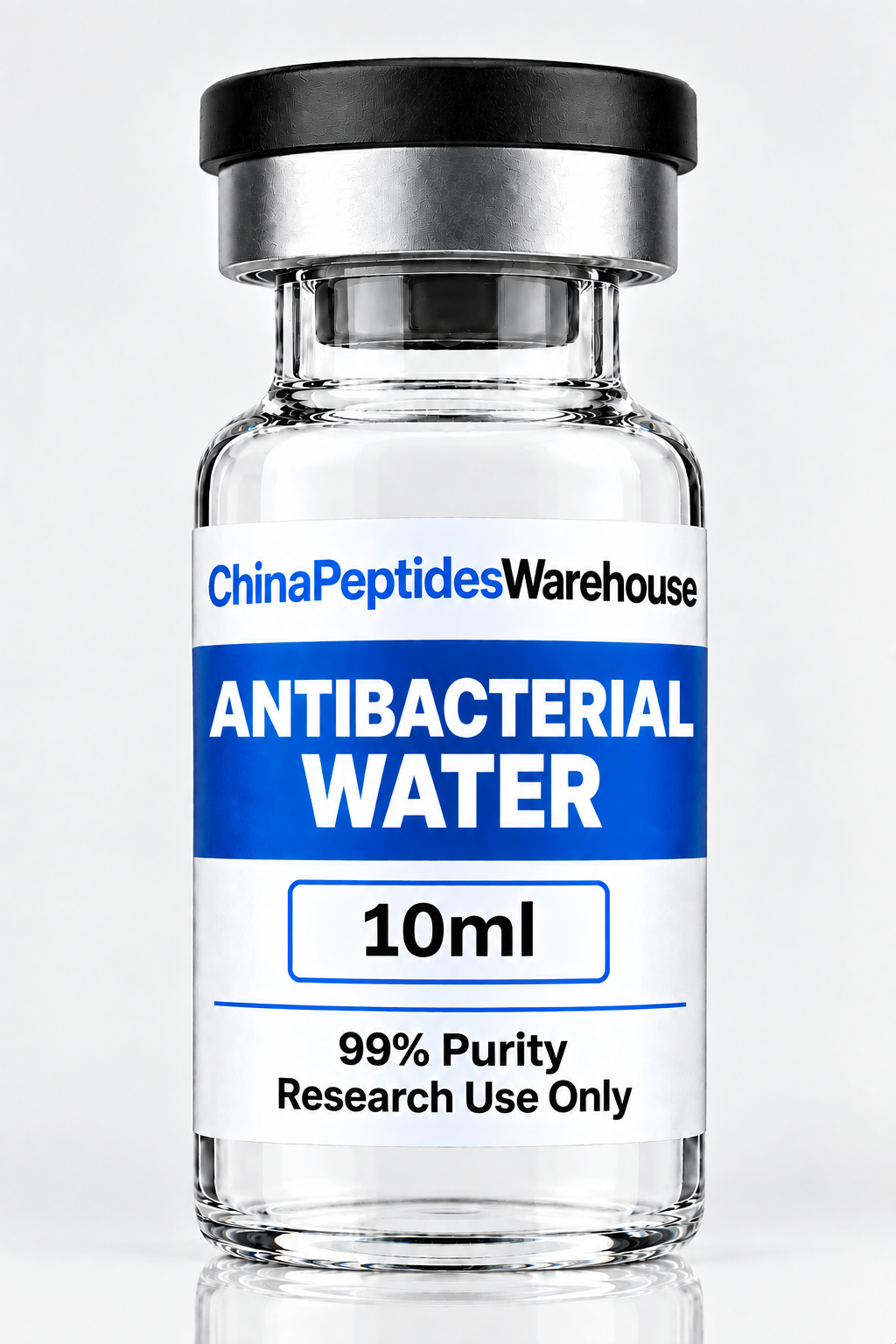
BUY ANTIBACTERIAL WATER 10ml
Original price was: $15.00.$11.00Current price is: $11.00.
BUY ANTIBACTERIAL WATER: The Ultimate Guide to Reconstitution, Sterility, and Lyophilized Compound Safety
When working with delicate lyophilized compounds, proteins, or laboratory reagents, the purity of your liquid diluent is just as critical as the quality of the active material itself. Reconstituting sterile freeze-dried powders with standard purified water or unpreserved saline exposes your solution to immediate bacterial growth, rapid molecular degradation, and chemical instability. When safety, long-term multi-dose preservation, and absolute sterility matter, making the choice to BUY ANTIBACTERIAL WATER is an essential step for any reconstitution protocol.
BUY ANTIBACTERIAL WATER
BUY ANTIBACTERIAL WATER: The Ultimate Guide to
Reconstitution, Sterility, and Lyophilized Compound Safety
When working with delicate lyophilized compounds, proteins, or laboratory reagents, the purity of your liquid diluent is just as critical as the quality of the active material itself. Reconstituting sterile freeze-dried powders with standard purified water or unpreserved saline exposes your solution to immediate bacterial growth, rapid molecular degradation, and chemical instability. When safety, long-term multi-dose preservation, and absolute sterility matter, making the choice to BUY ANTIBACTERIAL WATER is an essential step for any reconstitution protocol.
Antibacterial water—commonly referred to in clinical and laboratory settings as Bacteriostatic Water for Injection—is sterile, non-pyrogenic water containing a precise $0.9\%$ concentration of benzyl alcohol ($9\text{ mg/mL}$). This organic preservative acts as a bacteriostatic agent, inhibiting the growth and multiplication of bacteria within the vial. Whether you are reconstituting delicate research agents, hormone therapies, or healthcare solutions, sourcing laboratory-grade diluents guarantees total product stability and multi-dose safety.
What is Antibacterial Water?
Antibacterial water is purified, USP-grade water for injection that has been treated to eliminate all microbial life and supplemented with an antimicrobial preservative.
                      Raw Purified Water
                              │
                              ▼
                Multi-Stage Distillation & USP Filtration
                              │
                              ▼
                     Sterile Water Matrix
                              │
                              ▼
            Addition of 0.9% Benzyl Alcohol Preservative
                              │
                              ▼
               Bacteriostatic Diluent (Multi-Dose Capable)
The Role of $0.9\%$ Benzyl Alcohol
Without a preservative, a newly opened or reconstituted vial becomes vulnerable to airborne bacteria, fungal spores, and skin flora introduced by repeated needle punctures. The $0.9\%$ benzyl alcohol preservative works by:
-
Disrupting Bacterial Cell Membranes: Dissolves the lipid bilayer of micro-organisms, preventing cellular division and spore activation.
-
Extending Multi-Dose Shelf Life: Suppresses bacterial proliferation, allowing a reconstituted vial to remain safe for repeated draws over 28 to 30 days when kept refrigerated.
-
Maintaining Chemical Inertness: Provides a stable environment that does not alter pH or denature fragile amino acid chains and delicate active compounds.
Key Benefits of Using Antibacterial Water
-
Prevents Microbial Contamination: Protects multi-dose vials against common pathogens like Staphylococcus aureus, Pseudomonas aeruginosa, and Escherichia coli.
-
Preserves Delicate Molecular Structures: Ensures complex protein chains, enzymes, and active biologicals retain their structural integrity without premature cleavage or precipitation.
-
Cost-Effective Multi-Dose Capability: Allows single lyophilized vials to be accessed safely multiple times over several weeks rather than requiring single-use disposals.
-
Universal Solvent Compatibility: Easily dissolves a wide spectrum of freeze-dried cakes, powders, and crystalline compounds without leaving residue or cloudiness.
-
Reduces Localized Injection Reactivity: Maintains balanced osmolarity and sterile purity, minimizing skin redness, inflammation, or stinging during administration.
Detailed Usage Instructions for Reconstitution
Proper reconstitution techniques preserve compound stability and prevent contamination during liquid transfer. Following a clean, step-by-step method ensures maximum effectiveness.
┌─────────────────────────┬───────────────────────────────┬─────────────────────────────────────┐
│ Application Step        │ Target Action                 │ Standard Protocol Guidance          │
├─────────────────────────┼───────────────────────────────┼─────────────────────────────────────┤
│ Sanitization            │ Rubber Stopper Prep           │ Wipe both stoppers with 70% Alcohol │
│ Diluent Transfer        │ Draw Antibacterial Water      │ Use sterile syringe; match air vol. │
│ Mixing / Dissolution    │ Reconstitute Dry Powder       │ Run down glass wall; gentle swirl   │
└─────────────────────────┴───────────────────────────────┴─────────────────────────────────────┘
1. Sanitation and Preparation
-
Clean your workspace thoroughly and wash your hands.
-
Pop the protective plastic caps off both your lyophilized powder vial and your diluent vial.
-
Thoroughly wipe the rubber stoppers of both vials using fresh 70% isopropyl alcohol prep pads. Allow them to air-dry completely for 10–15 seconds.
2. Drawing the Diluent
-
Draw an volume of air into a sterile syringe equal to the amount of liquid you intend to transfer (e.g., $1.0\text{ mL}$ or $2.0\text{ mL}$).
-
Insert the needle into the antibacterial diluent vial, invert the bottle, inject the air to equalize pressure, and smoothly pull back the plunger to draw the exact volume needed.
3. Reconstituting the Compound
-
Insert the needle through the stopper of the lyophilized powder vial at a slight angle.
-
Slowly trickle the liquid down the inner glass wall of the vial. Avoid spraying water directly onto the freeze-dried cake, as forced impact can break down delicate molecular bonds.
-
Gently swirl the vial in circular motions until the solution becomes crystal clear. Never shake the vial vigorously.
Storage Guidance: Store sealed, un-opened diluent bottles at room temperature ($20^\circ\text{C}$ to $25^\circ\text{C}$). Once reconstituted with a compound, keep the resulting liquid solution refrigerated between $2^\circ\text{C}$ and $8^\circ\text{C}$ and discard any remaining liquid after 28 days.
The Role of Preserved Diluents in Peptide Protocols
In modern scientific research, clinical therapies, and wellness routines, freeze-dried active compounds are frequently utilized for their targeted biological activity. Reconstituting a delicate peptide sequence—such as BPC-157, CJC-1295, or Semaglutide—requires extreme care. Because a custom amino acid chain is fragile and susceptible to microbial degradation, using the correct diluent is crucial.
If a researcher or patient attempts to reconstitute a multi-dose vial using plain Sterile Water for Injection (without benzyl alcohol), the solution lacks antimicrobial protection. Every time a needle pierces the rubber stopper, microscopic contaminants can enter the vial. Within days, bacterial colonies can multiply, cleaving the peptide bonds and rendering the compound inactive or unsafe.
Choosing to BUY ANTIBACTERIAL WATER guarantees that your peptide solution maintains its structural stability, purity, and antimicrobial defense throughout its entire 30-day usable lifespan.
Quality Metrics: What to Look For Before Purchase
When choosing where to BUY ANTIBACTERIAL WATER, verifying sterile manufacturing standards, bottle integrity, and proper preservative balance is critical. Inferior diluents may contain incorrect benzyl alcohol concentrations or sub-standard filtration.
Quality Verification Standards
-
USP Grade Compliance: Manufactured to United States Pharmacopeia standards for sterile water for injection.
-
Optimal Preservative Ratio: Exactly $0.9\%$ benzyl alcohol ($9\text{ mg/mL}$) to ensure antimicrobial protection without causing tissue stinging.
-
Tamper-Evident Seals: Secure flip-off caps and thick rubber stoppers that self-seal after multiple needle punctures.
-
Clear, Particulate-Free Liquid: Solution must be completely transparent with no turbidity, cloudiness, or floating residue.
Real Customer Reviews
Review 1: Imperative for Multi-Dose Compound Protocols
Verified Buyer: Dr. Marcus V.Rating: ★★★★★Application: Laboratory Reconstitution“I have conducted research on synthetic proteins and delicate hormone compounds for years. Using unpreserved sterile water is a huge mistake for multi-dose applications. Choosing to BUY ANTIBACTERIAL WATER from this source ensures complete sterility and zero microbial degradation over our 30-day testing windows. The bottles arrive securely sealed, perfectly clear, and ready for clean lab transfers.”
Review 2: Smooth Reconstitution with Zero Stinging
Verified Buyer: Sarah K.Rating: ★★★★★Application: Daily Wellness Reconstitution“I reconstitute my weekly wellness solutions at home and used to worry about vial contamination. Switching to this bacteriostatic diluent gave me complete peace of mind. The reconstitution process is effortless, the liquid dissolves freeze-dried cakes instantly, and there is zero injection-site burning or skin irritation. Highly recommend to anyone looking to BUY ANTIBACTERIAL WATER online.”
Review 3: Secure Packaging and Fast Shipping
Verified Buyer: James T.Rating: ★★★★★Application: Research Diluent“Finding reliable, pharmaceutical-grade bacteriostatic water online can be hit or miss. This supplier ships fast, packs every bottle with protective cushioning, and includes verified batch lot numbers. The product quality is top-notch and performs flawlessly across all my laboratory reconstitution needs.”
Frequently Asked Questions (FAQ)
What is the difference between Sterile Water and Antibacterial Water?
Sterile Water for Injection is pure, sterilized water that contains no antimicrobial agents. It is strictly intended for single-use vials because it cannot prevent bacterial growth once opened. Antibacterial Water contains $0.9\%$ Benzyl Alcohol, which acts as a preservative to inhibit bacterial growth, making it safe for multi-dose vials over 28 to 30 days.
How long does a reconstituted vial last when using Antibacterial Water?
When reconstituted with antibacterial water and kept refrigerated between $2^\circ\text{C}$ and $8^\circ\text{C}$, most compounds remain stable and protected against microbial growth for 28 to 30 days.
Can I use Antibacterial Water for single-use injections?
Yes, but it is primarily engineered for multi-dose applications. For single-use applications where the entire vial is drawn immediately, plain sterile water or saline can be used. However, antibacterial water remains the universal standard for any protocol requiring repeated draws.
Why does my reconstituted solution sting slightly during injection?
A mild, temporary sensation can occasionally occur due to the $0.9\%$ benzyl alcohol preservative. Ensuring the reconstituted solution warms slightly toward room temperature before administration or injecting slowly typically eliminates any minor discomfort.
How should unopened Antibacterial Water be stored?
Unopened bottles should be stored at room temperature ($20^\circ\text{C}$ to $25^\circ\text{C}$) away from direct sunlight. Do not freeze unopened diluent bottles, as extreme cold can stress the glass container or cause liquid separation.
Conclusion
Whether you are managing complex clinical protocols, conducting laboratory research, or maintaining a personal wellness regimen, the quality of your reconstitution diluent directly impacts product safety and performance. Using unpreserved water risks bacterial contamination and compromises your active compounds.
When you are ready to secure long-term stability, total sterility, and dependable multi-dose preservation, choosing to BUY ANTIBACTERIAL WATER from a verified, lab-tested supplier provides the protection, quality, and peace of mind you need.
Reviews
There are no reviews yet.